RUS  ENG
Полная версия
ЖУРНАЛЫ // Mendeleev Communications // Архив

Mendeleev Commun., 2021, том 31, выпуск 1, страницы 24–26 (Mi mendc822)

Communications

Composite nanoparticles with titania–poly(N-vinylamide) core–shell structure

G. M. Kuz'michevaa, O. I. Timaevab, I. P. Chikhachevaa, R. V. Svetogorovb, R. G. Chumakovb, N. V. Sadovskayac, P. V. Dorovatovskiib, R. P. Terekhovad

a M.V. Lomonosov Institute of Fine Chemical Technologies, MIREA - Russian Technological University, Moscow, Russian Federation
b National Research Centre 'Kurchatov Institute', Moscow, Russian Federation
c A.V. Shubnikov Institute of Crystallography, FSRC ‘Crystallography and Photonics', Russian Academy of Sciences, Moscow, Russian Federaion
d A.V. Vishnevsky Institute of Surgery, Moscow, Russian Federation


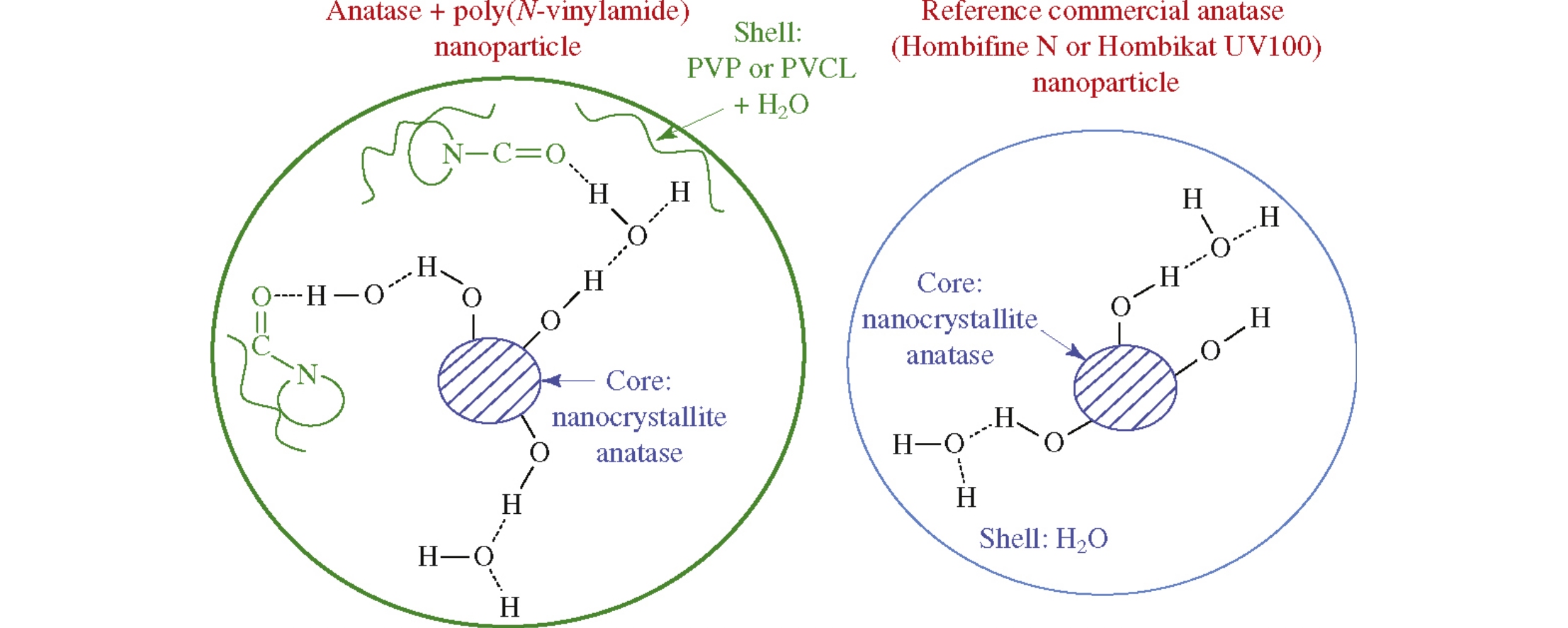
Аннотация: Composite nanoparticles with a core consisting of associated anatase crystallites and a polymeric shell consisting of poly(N-vinylpyrrolidone) or poly(N-vinylcaprolactam) were synthesized and found to have antimicrobial activity against Escherichia coli and Staphylococcus aureus as well as photocatalytic activity in decomposition of methyl orange and methylene blue dyes. The highest antibacterial activity of the particles with poly(N-vinylpyrrolidone) shell is due to the larger amount of $\mathrm{SO_4^{2-}}$ groups and water adsorbed on the surface, while their photocatalytic activity is comparable with that of commercial nanoanatase samples.

Ключевые слова: nanoparticles, titania, anatase, polymers, photocatalysis, antimicrobial activity.

Язык публикации: английский

DOI: 10.1016/j.mencom.2021.01.006


Реферативные базы данных:


© МИАН, 2026